


The Government has said New Zealand’s electoral law should be more modern, robust, and effective, but it has overlooked the most obvious solution: Automatic Voter Enrolment.
Automatic Enrolment has a proven track record overseas in countries like Australia, Germany and South Korea. By international standards, Automatic Enrolment is the benchmark of a modern, robust and effective democracy and New Zealand isn’t meeting it.
Our current enrolment system is time consuming and inefficient. It asks many New Zealanders to spend their time filling out paperwork and finding postboxes to give the Electoral Commission information that it already holds.
With changes already underway to enable automatic updates, this is the perfect time to modernise the process.
407,638
More voters could be enrolled by the next election if New Zealand introduces Automatic Enrolment.
Each election cycle, the Electoral Commission sends hundreds of thousands of letters to eligible New Zealanders, encouraging them to vote. Most of these go unanswered. With Automatic Enrolment the Electoral Commission would use this information to make everyday New Zealanders’ lives easier. With changes already underway to enable automatic updates, this is the perfect time to modernise the process.
HoW DOES AUTOMATIC VOTER ENROLMENT WORK ?
-

Electoral Commission given trusted data
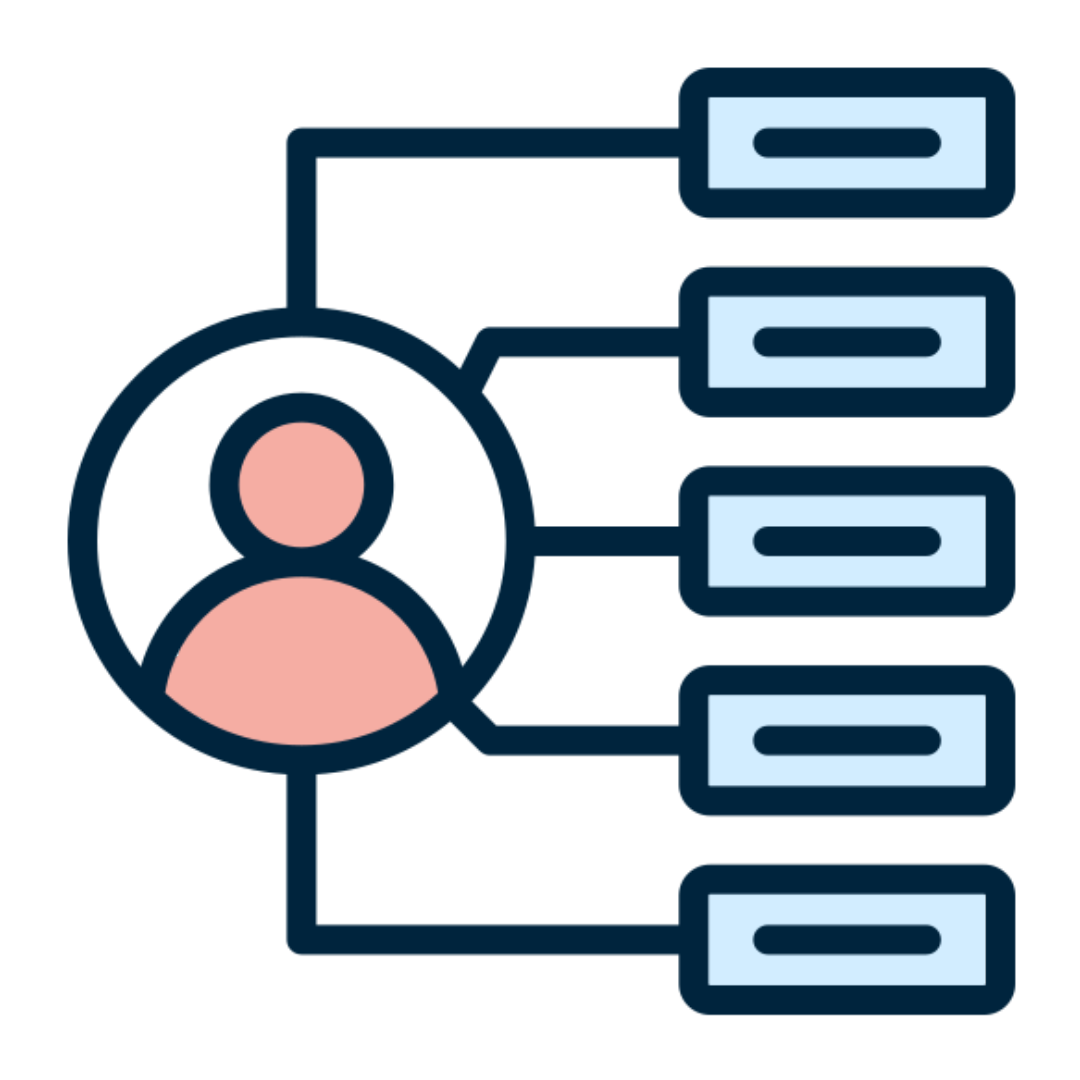
The Electoral Commission gets trusted data from different agencies like the IRD, the Ministry of Social Development and the New Zealand Transport Agency.
-
Data checked against electoral roll
Using the trusted data - the Electoral Commission can identify who is already on the roll and whose information needs updating. If everything is correct, you’re already good to go!
-
Data verified
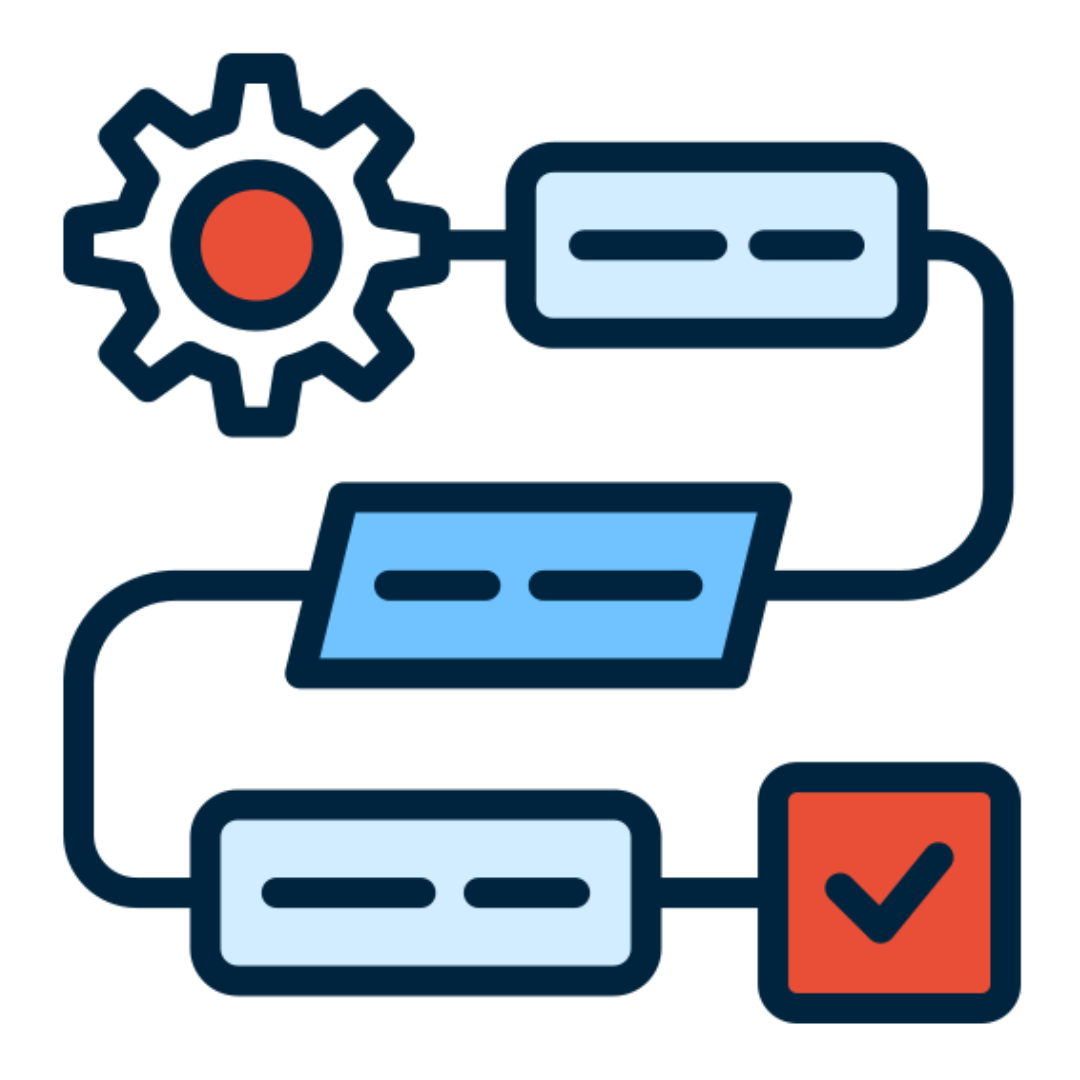
If the Electoral Commission finds a your name is non the roll, they’ll verify you’re eligible to vote in New Zealand.
If they can’t automatically verify your eligibility, then you can still enrol manually.
-

Notification sent
If the Electoral Commission identifies that you need to be added to the roll - they will send you a letter. If the information looks all good - you’re good to go! Otherwise you would have an opportunity to opt-out or correct the info.
-

Enrolled
Process complete! If the Electoral Commission doesn’t get an objection from you, they will go ahead and automatically enrol you or update your information.
Easy as.
How to make a submission
You can help us tell the Government that New Zealand needs a modern, effective and easy enrolment process by making a select committee submission online!
It’s easy - your submission can be short and sharp! If you’re short on time - it can be as quick as saying “Let the Electoral Commission enrol people automatically!”
That’s it - just like automatic enrolment - it’s easy, it’s quick, and it helps make our democracy better.

Step 1: Follow the link below to the Parliament Website
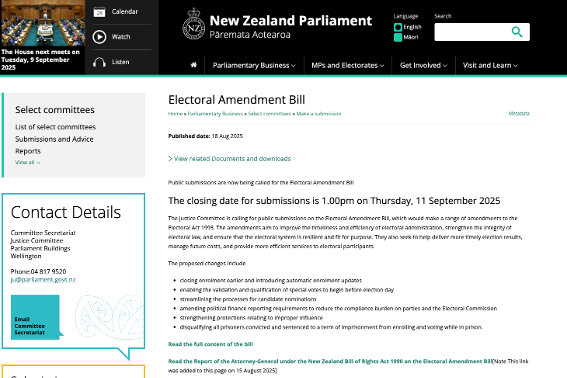
Step 2: Click “I’m ready to make my Submission”
11 SEP
Step 3: Don’t forget to complete your submission by 11 September!
FAQ
-
Automatic Voter Enrolment means eligible New Zealanders are placed on the electoral roll automatically using information the government already holds (e.g. from NZTA, MSD, DIA). People would remain free to update their details, switch between the Māori and General rolls, or opt for the unpublished roll if they have safety concerns.
-
New Zealand’s current enrolment system is slow, inefficient, and excludes too many people. It relies on paperwork, postboxes, and manual updates – despite the Electoral Commission already having access to the necessary information.
At the 2017 election, the Commission mailed over 450,000 invitations to enrol or update details. Most went unanswered. As a result, more than 280,000 eligible New Zealanders were missing from the roll on election day.
-
Government data already shows who is eligible but unenrolled. Instead of mailing forms, the Electoral Commission would simply add them to the roll. Enrolment would remain compulsory (as it already is), but the process would be opt-out rather than opt-in.
People could still correct errors, request to be on the unpublished roll, or transfer between Māori and General rolls.
-
Not for everyone. The 2023 Census showed 10% of households lack internet access, rising to 14–17% for renters and rural communities. These are the very groups already less likely to be on the roll — and they are also most affected by cuts to postal services. AVE would remove these barriers and make participation fairer.
-
Yes. It’s the international benchmark for modern democracies.
Australia: More than 98% enrolment, despite having an earlier cut-off than NZ.
Canada, Finland, Germany, South Korea, much of the US, and soon the UK also use versions of AVE.
Results show dramatic improvements in enrolment and turnout, without compromising integrity.
-
No system is perfect, but AVE can dramatically close the enrolment gap – from 88% to around 98% participation, based on Australia’s experience. That allows the Electoral Commission to focus its outreach on the smaller number of communities that remain underrepresented, rather than chasing hundreds of thousands of unenrolled adults.
-
International evidence suggests higher enrolment leads to higher turnout. In Oregon (USA), turnout increased 4.1% after Automatic Enrolment was introduced, compared to a national rise of only 1.6%
-
Quite the opposite. AVE is cheaper and more efficient:
Reduces the need for temporary fieldworkers (16,700 were hired in 2017).
Cuts down on mass mail-outs and processing of paper forms.
In Arizona, paper enrolment cost about $1.44 NZD per person vs $0.06 NZD for Automatic Enrolment.
Money saved can be redirected to outreach, education, and voter participation efforts.
-
The Government is already making changes to the enrolment system, including automatic address updates.
Planning and infrastructure for modernisation are underway.
This is the perfect moment to deliver a reform that is efficient, rights-affirming, and future-proof.
What ArE PEOPLE SAYING?